COVID Island: Watch the Full Documentary for Free — The Art Of Leaving Room For The Viewer
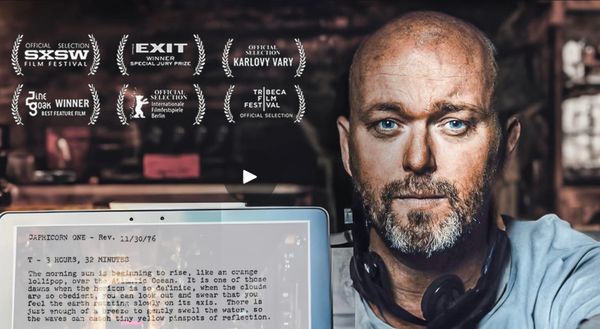
My documentary about life in Iceland during the pandemic is now available on YouTube. Below, I share how it began—and how uncertainty shaped the film.

I was sitting in the car outside the hospital, listening to helicopters overhead. Inside, my sister needed an operation. Because of the COVID restrictions, I couldn’t be beside her to ask questions, discuss whether the operation was the right decision, or advocate for her. I had driven her there. Now I could only wait.
That was when I got angry.
Around that time, I started noticing the empty streets, the stray cats moving through them, day and night. I lived not far from the main hospital in Reykjavík, and helicopters would fill the air with their thunder. Between them, there was a dead silence. I remember the feeling of seeing no more than one person at a time beneath a lamppost.
Meanwhile, there was advice everywhere. Everyone seemed to have something to say about health, about what to do, about what was happening. Strange ideas surfaced alongside the daily instructions. Everything became surreal very quickly: urgent, uncertain, strangely still.
I couldn’t explain what I was experiencing. Eventually, I thought I could point the camera towards that frustration.
That feeling became my way into COVID Island.
Beginning Without Knowing
What always amazes me when I start a documentary is how much uncertainty I face. After more than twenty years of making films, I still find myself beginning with something I can feel but cannot explain. I don’t know what shape it will take, or whether I can make a film out of it.
With this film, I wanted to capture the atmosphere. The news was already documenting events extensively. I felt I wasn’t seeing enough of the ordinary world becoming unfamiliar—the small, everyday experiences that might disappear from memory.
In my development notes, I described wanting to make “the missing colour in the rainbow.” It was my way of asking what I could contribute with the tools I had.
Finding Depth in the Surface
I returned to influences from Eastern European cinema and to the way paintings use ordinary, visible things to suggest something harder to name. David Hockney’s work helped me think about this: how paying close attention to the surface could become a way of finding depth.
A person beside a window. The distance between people. An empty street. I wanted to stay with what was physically there and allow the feeling to emerge through it.
That was how I was thinking about metaphor. I wasn’t looking for an object to stand neatly for an idea, or planting symbols for viewers to decode. I was interested in how an ordinary image could take on another meaning because of the circumstances around it. An empty street during the pandemic was still an empty street, but it no longer felt ordinary.
This gave me a practical direction: keep the surface clear and simple, and leave what lay beneath it open. The framing, duration and sound could give viewers time to notice something without my explaining what they should find.
It also meant trusting that the image might carry more than I could put into words. That was both the attraction of the approach and what made it frightening.
Leaving Room for the Viewer
It sounds simple, perhaps even naïve: take a camera and record the atmosphere. But committing to that approach was difficult. I kept reaching for more familiar ways of making a documentary. A clear argument. A structure I could describe. Something that would reassure me that I knew what I was doing.
I had to accept that the uncertainty belonged in the work.
In the editing, that meant spending time with the footage and allowing connections to emerge. I tried to resist making every moment prove a point or deliver an emotion. Every frame and every cut is still a choice, but I wanted viewers to have room to bring their own experience to the film.
For me, that is a familiar part of documentary filmmaking. Sometimes I have to stay with a feeling for quite a while before I understand how to work with it. With COVID Island, the frustration of not knowing became a place to begin.
If you have questions about the film, how it was made, or your own filmmaking, leave them in the comments. I’m here to answer them.