Stopping Is the Work
For me, writing is never just about producing words. It is a custom job each day, sometimes each hour, where the real task is figuring out how to interrupt momentum long enough for that something to appear.

Writing has taught me something I didn’t expect:
that every state of mind requires a different way of stopping.
For me, writing is never just about producing words. It is a custom job each day, sometimes each hour, where the real task is figuring out how to interrupt momentum long enough for that something to appear. I’m not claiming success at this. But I’ve begun to suspect that attempting the stop may be more important than achieving it. The reach matters. The gesture matters.
Again and again, the work returns me to the same insight: clarity doesn’t arrive because I push harder. It arrives when I interrupt motion.
In Buddhist practice there is a foundational pairing:
Calming the water.
Seeing the bottom.
The insight is simple and ruthless:
You do not add wisdom.
You remove motion.
When movement stops, clarity is already there.
This is why stopping is valuable not because it feels pleasant, but because it reveals what is already present. Monks do not think their way to insight. They interrupt momentum. They stop the churn long enough for reality to become legible.
The faster life moves, the more stopping becomes an ethical act.
Stopping is not withdrawal.
It is respect.
For words.
For children.
For reality itself.
There is an image I return to often.
Time is a ribbon being pulled through your hands.
When urgency rises, the instinct is to pull back. To resist. To fight the speed. But the most effective response is simpler.
You don’t pull back.
You close your hand.
That’s it.
No breath count.
No mantra.
Just this: the ribbon is held.
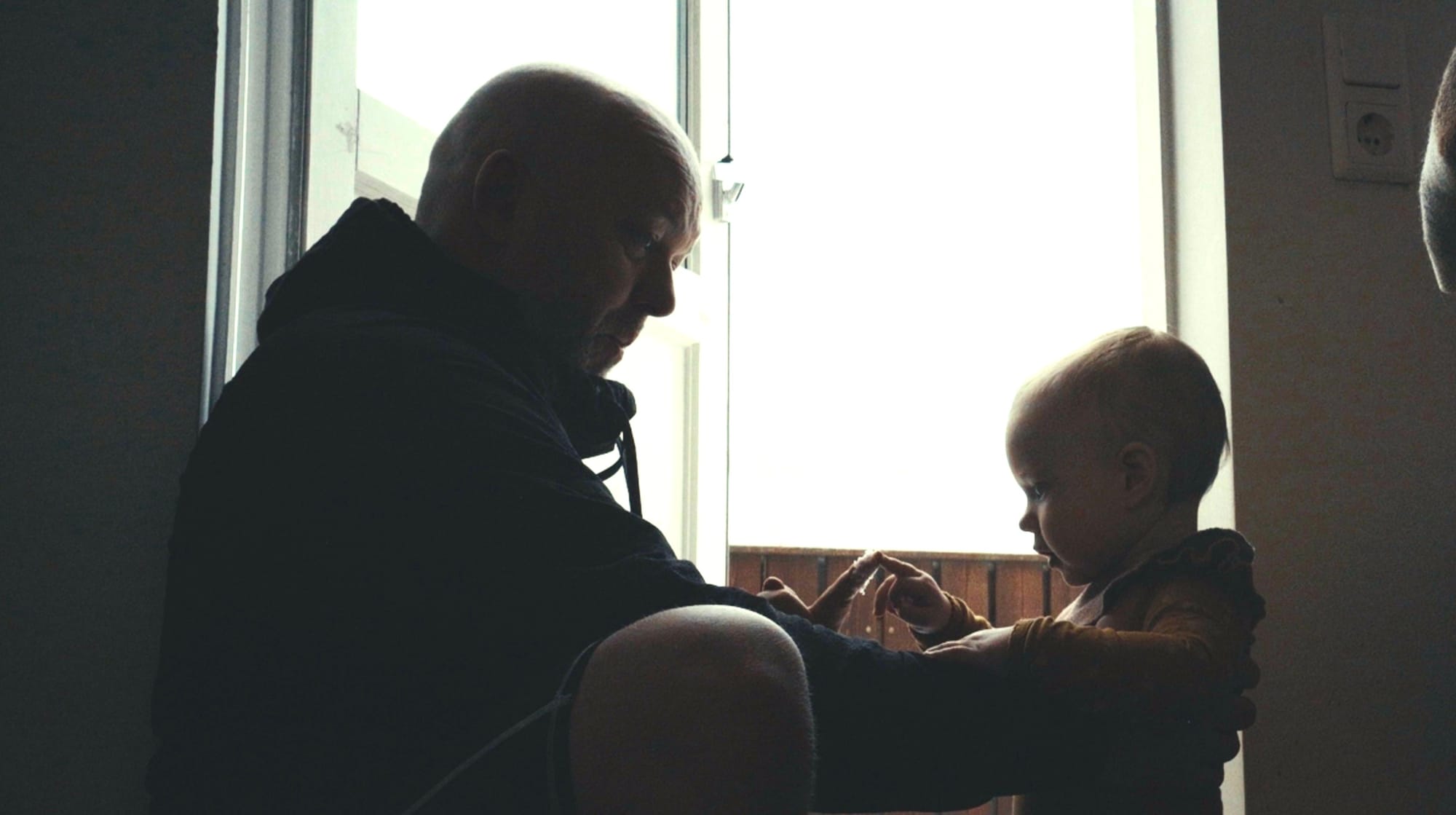
When I do this around my daughter, I can feel the effect immediately. Children read time-pressure faster than adults. They don’t need explanations. They feel whether time is being chased or held.
This same principle applies to writing.
Most writers treat the page like a road. Forward motion. Progress. Distance covered. Buddhism offers a different image.
The page is a clearing, not a road.
You don’t arrive by speed.
You arrive by standing still long enough for the clearing to appear.
Before writing, I sometimes ask myself one question:
What happens if I stop arriving and just stand here?
Often, that is enough.
Another question I return to is this:
If this minute were borrowed, how gently would I hold it?
Urgency collapses when time is treated as a loan rather than a possession. Attention sharpens. Care remains, but haste loosens its grip.
And then there is this one, which works almost instantly:
What part of this moment is already complete?
Completion collapses time pressure. When something is already finished, it no longer demands speed.
This matters especially in care. Because care accelerates time. Presence dissolves it.
When you care, the nervous system speeds up to protect.
When you are present, protection becomes unnecessary.
So the goal is not to slow life down.
It is to remove urgency without removing care.
This distinction is subtle, and Buddhism is obsessed with it for good reason.
There is an old Zen image of an ox pulling a cart.
As long as the ox moves, the world blurs.
When the ox stops, the entire field appears.
The ox is not time.
The ox is habitual forward pressure.
Stopping means this:
The ox stands still.
The cart does not disappear.
The world becomes legible.
A fast question you can use, anywhere, is this:
What would still be here if nothing moved for one breath?
I of course have no idea. I just know, or rather my belief is that the treasure is in attempting and failing. That, I’ve learned, is often enough.