Final Cut Pro X and the Shape of Thought
I Didn’t Switch to Final Cut Pro X -- I drifted into it.

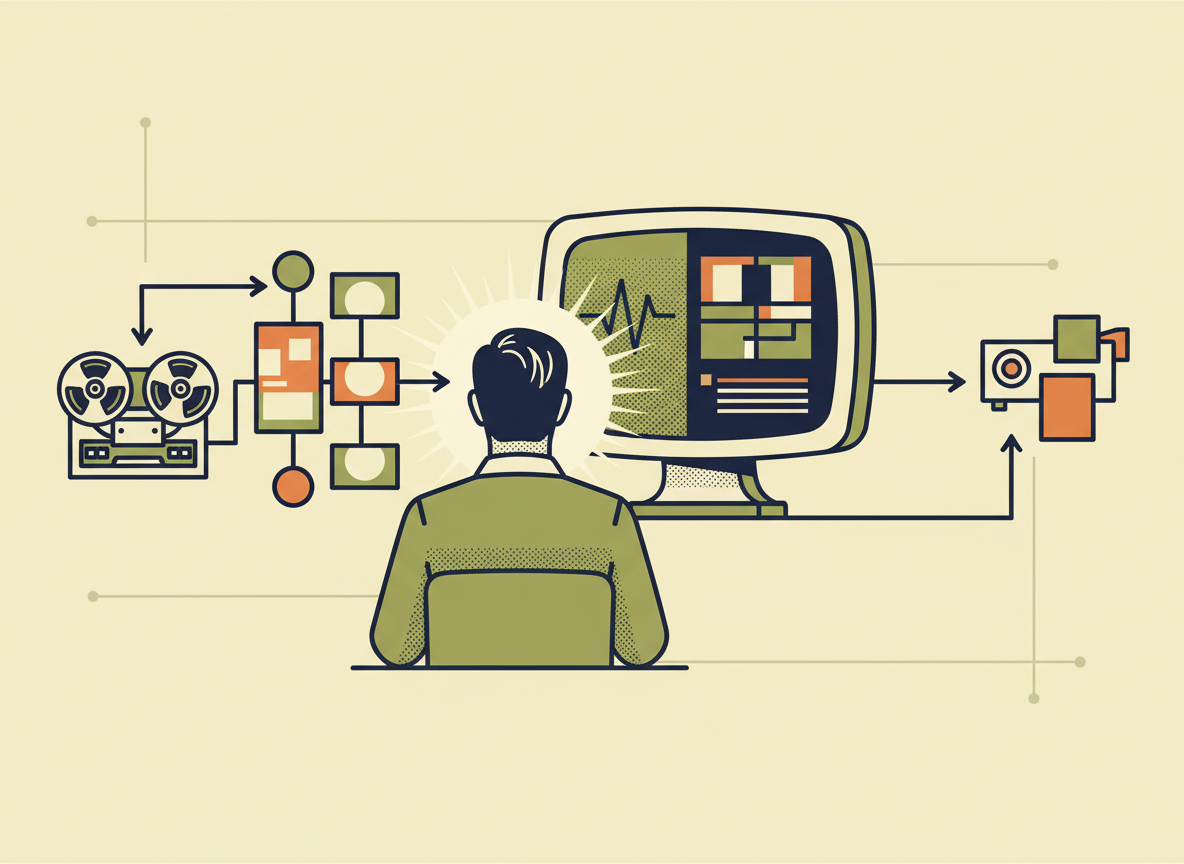
After twenty-five years of cutting film, tape, and timelines that behaved like obedient tools, I found myself drifting toward something I didn’t fully trust, and still don’t. What follows is not a defense of Final Cut Pro X, but a reflection on authorship, fatigue, and the strange relief of working inside a system that thinks less like a machine and more like memory. Read it as a director thinking out loud, not as advice.
About this post: I’m writing about editing, and about a particular editing tool called Final Cut Pro X, one of several systems filmmakers use to cut films, alongside others like Avid Media Composer, Davinci Resolve or Adobe Premiere Pro.
Disclaimer About Editing Softwares
In the end, editing software is just a pen and paper.
A tool for marks and erasures. A surface that receives thought. Nothing more than that. No software thinks for you. No interface replaces intention. Whatever story appears on the screen was already moving somewhere inside you before the first cut.
Still, the surface matters.
I Didn’t Switch to Final Cut Pro X
-- I drifted into it.
I’ve been making films for about twenty-five years. I started in a world where editing was physical before it was conceptual. Tape had weight. Cuts were irreversible in a way that stayed in your body. You learned to think before you touched anything, because touching meant consequences.
Linear editing trained a certain discipline. You respected order. You respected time. You respected that moving one thing meant disturbing everything downstream.
Then non-linear arrived, and suddenly time loosened. We pretended it was still tape, but it wasn’t. We built timelines that looked like tape machines because we needed the comfort. Tracks stacked neatly. Audio lived where it was told to live. Video stayed where it was placed. It all made sense, mechanically.
For years, that worked.
But something subtle happened.
The timeline became something I had to protect instead of something that helped me think.
When Final Cut Pro X appeared, I didn’t like it. Or rather, I didn’t trust it. It felt slippery. It didn’t behave. Things moved when I didn’t explicitly move them. It broke rules I had internalized so deeply they felt like ethics. Not preferences. Ethics.
So I ignored it for a while.
What eventually pulled me back wasn’t features. It wasn’t speed. It was fatigue. I realized I was spending too much energy holding the structure together instead of listening to the story. Too much effort went into defending the timeline from collapse, instead of letting the cut speak back.
Final Cut Pro X didn’t feel like a better editor. It felt like a different mental state.
The first thing that clicked was that it didn’t think in tracks. It thought in relationships. Shots belonged to each other. Sound belonged to intention, not to a lane. When I removed something, the film didn’t fall apart. It recomposed itself.
That was unsettling at first. Then strangely calming (Yet it remains unsettling in a good way).
I noticed something important: this was closer to how I remember directing. On set, I don’t think in tracks. I think in pressure. In adjacency. In what happens if this moment arrives half a second earlier. In how a glance contaminates the silence after it.
Final Cut Pro X behaved like that.
The Primary Storyline wasn’t a track. It was a spine. Everything else felt like thought bubbles, undercurrents, memories, intrusions. Compound clips stopped feeling like folders and started feeling like scenes that could be held in one hand.
And roles. Roles weren’t technical. They were emotional. Dialogue as cognition. Music as breath. Ambience as presence. Once named, they stopped asking for attention.
What surprised me most was how dreamlike the process became. Not chaotic, but fluid. I could move through the cut the way you move through memory, without constantly checking whether the furniture was still aligned.
I stopped worrying about breaking the timeline.
It felt harder to lie to myself.
Final Cut Pro X doesn’t let you hide sloppiness behind structure. If something doesn’t belong, you feel it immediately. The software doesn’t punish you. It nudges you. It keeps asking, quietly: does this really want to be here?
That’s a director’s question.
I should say this clearly: the mistrust never fully disappeared. I still don’t believe in the software in a rational way. I don’t trust it like a system or a doctrine. But alongside that mistrust, something else appeared. A strange, non-rational sense of authorship. As if the tool stopped insisting on control and instead allowed me to remain present with the material.
Not safer. Just closer.
I didn’t abandon my old ways. I carry them with me. The discipline from linear editing is still there. The respect for cause and effect is still there. But the surface has softened. The friction is gone in places where it no longer serves thinking.
At this point in my career, that matters more than speed or compatibility or orthodoxy.
Final Cut Pro X feels less like a machine and more like a listening space. Like the cut is alive while I’m working on it. Like the film is allowed to change its mind before it hardens.
I don’t think it’s for everyone.
But for someone who directs, edits, rewrites, and remembers all at once, it feels uncannily aligned.
Conclusion
In the end, editing software is still just a pen and paper.
But some paper resists you. Some accepts anything. And some, quietly, holds the pressure of thought without tearing.
Story is not a fixed object.
It’s something you move through.
And occasionally, the surface lets you feel that movement more clearly.