Designing the Wait Gap
The principle is simple: design the gap instead of letting it design you.


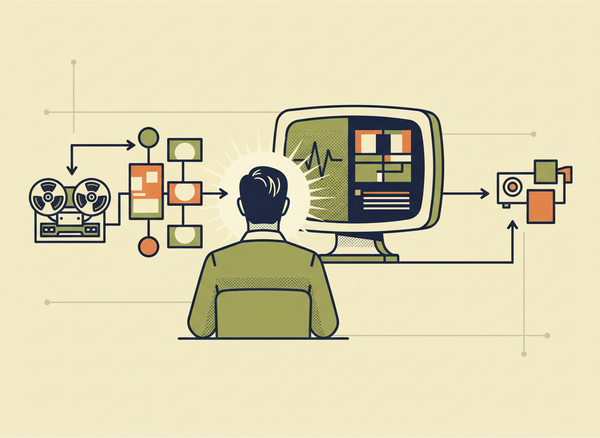
There’s a fragile moment that sneaks into every creative session. You’re in the middle of writing, editing, or shaping a project when the machine tells you to wait. Thirty seconds while something loads. A spinning wheel, a frozen screen, a tiny delay.
It seems harmless, but that gap is dangerous. It can snap your focus, scatter your thoughts, and send you wandering down the black hole of “just checking something” online. One small pause can wreck the rhythm of a whole session.
The principle is simple: design the gap instead of letting it design you. Even ten seconds with a ritual beats ten seconds of losing the thread.
The truth is, the gap won’t go away. What you can do is design it. Think of it as building little islands of attention — anchors you place ahead of time so you don’t drift.
Here’s how:
1. Have a ritual
Every time you hit a wait, do the same small thing: breathe twice, stretch your shoulders, glance at a sticky note. It’s a signal that keeps you steady.
2. Say the task
Before you click “run” or “export,” say what you’re doing: “I’m sending this file to check the colors.” That way your mind remembers the thread.
3. Do a mini-step
Don’t scroll aimlessly. Use the wait for something tiny that still belongs to your flow — jot a word, tidy a file, check your plan.
4. Breathe and reset
Treat the pause as a cue. One breath in, one breath out, notice posture. It clears the irritation and readies you for the next step.
5. Stay shallow
Skip the big distractions. No diving into new tabs or your phone. Keep the pause light so you can slip back in without friction.
The principle is simple: design the gap instead of letting it design you. Even ten seconds with a ritual beats ten seconds of losing the thread.
Your creative energy is precious. Don’t let a loading bar steal it.